

On February 26, with 70 votes against and 77 in favor, the National Assembly, controlled by the party of right-wing President Daniel Noboa, approved the controversial mining and energy law. According to the executive branch, the law seeks to attract foreign investment from large mining companies.
Following the arrest of the mayor of Guayaquil, which has been considered a form of political persecution by various sectors, the president decided to relocate the government to that city. Immediately afterwards, the legislature, chaired by Niels Olsen, Noboa’s right-hand man, decided that the National Assembly sessions would be held near Guayaquil, in Samborondón, where a significant number of Ecuador’s wealthiest people live.
There, the government and its assembly members celebrated the passage of a law that, according to several opposition groups, benefits large companies, puts nature at risk, and offers minimal gains to the Ecuadorian state.
What changes were made with the mining and energy law?
The new law replaces environmental licenses (which, after exhaustive analysis, grant or deny permits to mining companies) with simplified authorizations, which would open the door to a proliferation of mining projects even if they do not meet minimum approval standards, potentially putting nature and surrounding populations at risk.
Another fundamental aspect that is transformed by the law is that concessions of territories to mining companies can now last up to 30 years, and they could resort to the Armed Forces to protect their interests against possible claims by the local population.
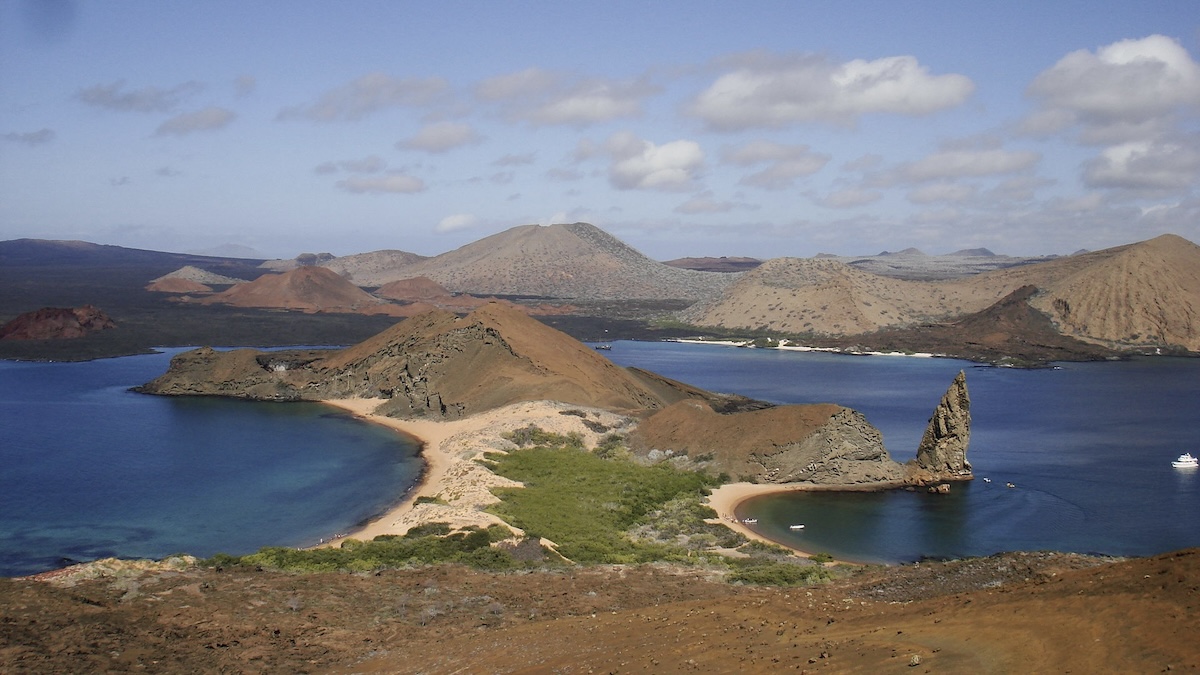
One of the most controversial points is that the new law allows for the extraction of aggregates and stone for construction in the Galapagos Islands. The islands are one of the places in the entire country with the greatest number of environmental protections due to its unique natural and plant life.
But the law aims not only to transform the mining economy, but also the energy sector. The ruling party has opened up the possibility of partial privatization of the electricity sector through concessions that could last up to 40 years, with the option to renegotiate contracts once, which could result in private companies controlling the energy sector for up to 80 years.
Against the will of the people?
And while the law includes a general provision stating that it will be applied in accordance with the results of popular consultations and referendums, many question the decision, considering it authoritarian and undemocratic.
In fact, whenever citizens have been asked whether laws protecting nature should be strengthened or improved, the answer has been a resounding YES.
In 2018, the population was asked whether the protected area of Yasuní National Park, one of the most biodiverse places on the planet and threatened by oil exploitation, should be expanded. They were also asked whether metal mining should be limited in protected areas and urban zones. Ecuadorians voted overwhelmingly in favor.
At the local level, support has also been strong. In 2019, in Azuay, the population was asked whether it would authorize mining in the Quimsacocha area, to which the vast majority of people voted NO. In the same province, in 2021, Cuenca, one of the most populous cities in the country, 80% of residents voted in favor of banning large-scale metal mining in areas where water is generated.
The capital, Quito, has also spoken out against banning mining and exploration in the Chocó Andino area, adjacent to the metropolitan area. This happened in 2023, the same year that the Ecuadorian people, through a National Popular Consultation, ordered that the oil found under the Yasuní National Park could not be exploited in perpetuity.
The government, aware that its project to reform the constitution (which grants rights to nature) failed resoundingly in 2025, and that the people have repeatedly expressed their majority opposition to energy and mining projects that cause damage to the environment and to people, decided to opt for the legislative route, a move that has been heavily criticized by environmentalists who see Noboa’s governing style and that of his close economic circle as authoritarian and contrary to the will of the majority.
Read more: Ecuadorian people deal a crushing blow to neoliberalism in Noboa’s referendum
Protests against the law
In response to the National Assembly’s decision, hundreds of citizens took to the streets of Quito to protest against the mining and energy law. Among the participating groups were YASunidos, Quito sin Minería, and other collectives that denounced the law as an attack on the rights of nature and the Ecuadorian people to benefit the economic elites.
In fact, the YASunidos collective, one of the groups that promoted the defense of Yasuní National Park, stated: “This law is not a ‘technical adjustment’: it is a political decision that seeks to shield and accelerate the expansion of high-impact activities under the guise of ‘economic efficiency’, ‘environmental sustainability’ and ‘legal certainty’, prioritizing the profitability of economic elites over rights.”
Furthermore, in the statement, YASunidos affirms: “In view of the Ecuadorian State’s systematic practice of not complying with the will of the Ecuadorian people, who have repeatedly said yes to life and no to mining … we declare that as a collective we will immediately proceed to file an action of unconstitutionality before the Constitutional Court of Ecuador.”
Thus, it seems that Noboa has found a mechanism to carry out his neoliberal economic and political program that he agreed upon with his international allies, specifically with the International Monetary Fund, one of his government’s main lenders. However, this type of political attitude could cause growing unrest among the population, which would explain his decline in popularity (according to de latest polls, almost 60% of Ecuadorians rate his government negatively) and his latest electoral defeat in the 2025 referendum.



