

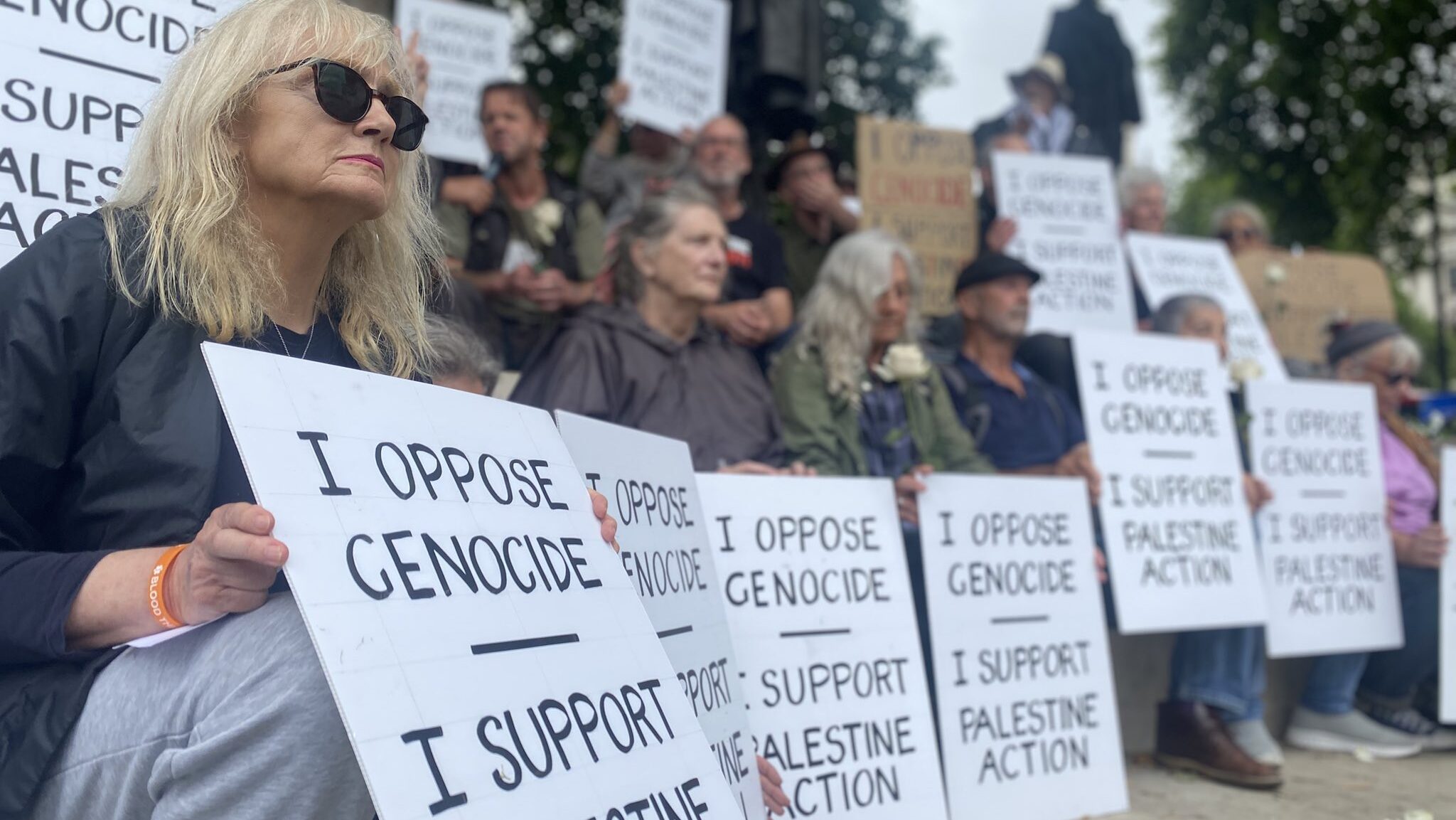
On the day the proscription of the direct action group Palestine Action took effect in Britain, Counter Terrorism police in London arrested 27 people during a peaceful protest. Demonstrators held signs reading “I oppose genocide. I support Palestine Action,” in front of a monument to non-violent resistance figure Mahatma Gandhi. Among those arrested were an 80-year-old priest and several public services workers, fueling widespread disbelief at Prime Minister Keir Starmer’s intensifying crackdown on the Palestine solidarity movement.
Read more: British parliament votes to ban Palestine Action despite public outcry
Palestine Action was officially banned following an action in which activists threw red paint on two British warplanes, protesting the Labour government’s continued support for the genocide in Gaza. That support includes intelligence sharing and the export of military equipment, such as parts for F-35 fighter jets, to Israel. The group’s actions have targeted British-based sites of companies like Elbit Systems and Rafael, always avoiding harm to workers and other people.
“Through relentless actions and the willingness to sacrifice our liberty, we’ve forced shut three Israeli weapons factories, pressured over a dozen of companies to cut ties with Elbit Systems and cost the Israeli weapons maker billions of pounds in lost contracts,” Palestine Action wrote before its social media accounts were removed. “The most important victory is building an effective global movement in service of the Palestinian people.”
Proscription won’t silence resistance to genocide
The government’s aggressive move to ban the group, as well as the police’s swift arrests of peaceful demonstrators, has drawn sharp criticism, especially for prioritizing the criminalization of dissent over protecting civil liberties and upholding international law. “We commend the Counter Terrorism police for their decisive action in protecting the people of London from some cardboard signs opposing the genocide in Gaza and expressing support for those taking action to prevent it,” wrote Defend Our Juries. “It’s a relief to know that Counter Terrorism police have nothing better to do.”
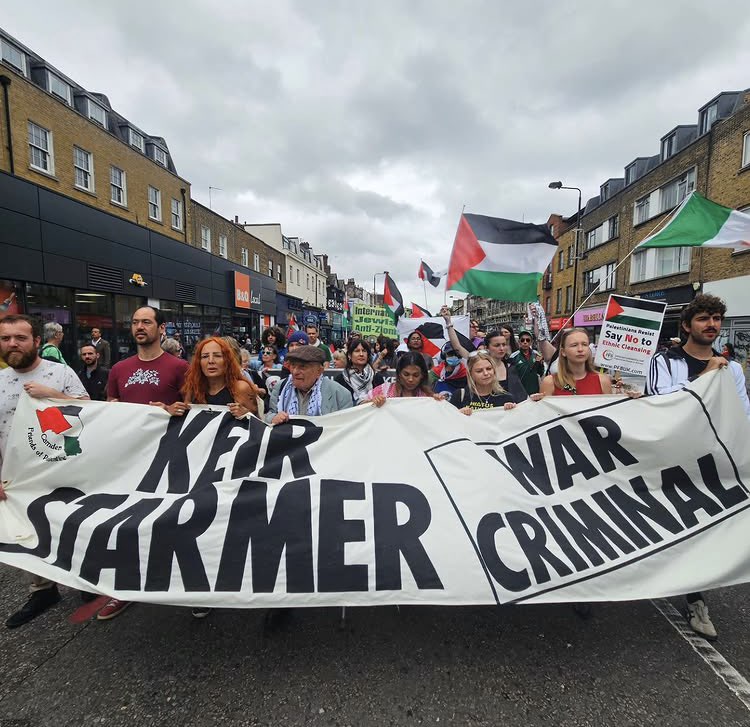
Since the parliamentary vote last week – backed by all but a handful of MPs – London police have issued warnings that people may face prosecution under terrorism laws for acts such as wearing Palestine Action t-shirts or posting supportive content online. Despite these threats, public figures like musician and anti-war activist Roger Waters have reaffirmed their support for those resisting the Gaza genocide and urged others to speak out.
“If we cannot speak freely about the genocide that is occurring, if we cannot condemn those who are complicit in it and express support for those who resist it, then the right to freedom of expression has no meaning, and democracy and human rights in this country are dead,” Defend Our Juries stated in a letter to London Police Commissioner Mark Rowley ahead of Saturday’s protest.
Will mass disobedience challenge the ban?
More actions are expected in the coming weeks, as a wide range of organizations and advocacy groups reject the terror designation of Palestine Action and call for broad resistance. “Unjust laws are no laws at all,” wrote We Do Not Comply. “Mass lawbreaking is the heart of classical civil disobedience. The law you disagree with, you break en-masse,” they added, drawing on the legacy of civil rights movements.
Read more: Tribunal for Palestine against Germany pledges to bring the guilty “before the judges of the nations”
At the same time, repression of Palestine solidarity has continued in the courts. Trials for anti-war activists Chris Nineham and Ben Jamal, both important figures in organizing national demonstrations since October 2023, were postponed until next year, leaving the threat of legal consequences hanging over protest organizers.
However, as the ban on Palestine Action takes effect and the right to protest comes under mounting pressure, mass demonstrations continue across the UK, including in Starmer’s own constituency. Meanwhile, progressive and left-wing parliamentarians are pushing for in-depth inquiries into Britain’s support for Israel’s military campaign, despite Labour’s opposition to such efforts in Parliament.



